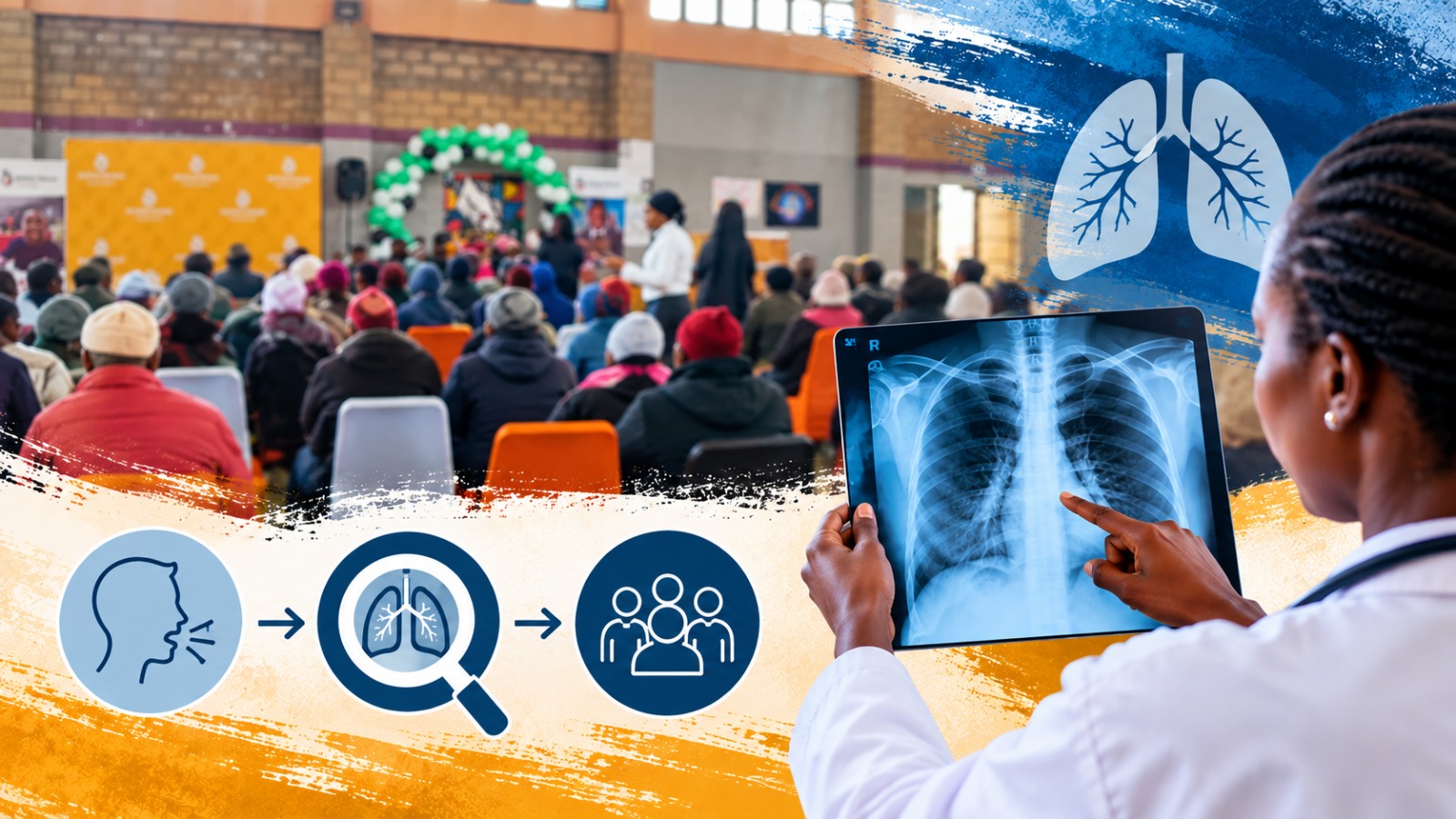
Someone walks into a clinic with a persistent cough. Perhaps they have been losing weight, waking up with night sweats or feeling unwell for weeks.
They may have tuberculosis. But will they be tested?
That simple question matters enormously in South Africa, where TB remains one of our biggest public-health challenges.
Recent research has highlighted a troubling gap. Studies conducted in South African health facilities found that many people who arrive at clinics with symptoms that could suggest TB are not actually tested. Across the studies considered, the proportion receiving a TB test varied widely, with a median of only 30% (Low, Spotlight, 23 September 2026).
This means that opportunities to diagnose TB early may be missed every day.
And early diagnosis matters.
When someone with TB is diagnosed and starts effective treatment, they will typically become much less likely to pass TB on within about two weeks. Finding TB earlier therefore does more than help one patient. It can also reduce the chance of the disease spreading within a household and community.
This is particularly important in communities where people live in crowded conditions, where travelling to a clinic costs money or where taking another day off work to seek health care may simply not be possible.
There is reason for hope. Newer point-of-care TB tests are being explored that could make testing simpler and faster, including tests that can use tongue swabs as well as sputum. Researchers estimate that dramatically increasing testing among people who arrive at clinics with TB symptoms could substantially reduce both TB illness and deaths in South Africa.
But technology is only part of the answer.
We also need to make the most of the moment when someone walks through the clinic door.
A persistent cough, chest pain, fever, night sweats or unexplained weight loss should prompt us to think about TB. Health care workers need the time, tools and support to recognise these signs and act on them. Communities also need clear information so that people know when to seek help.
This is where community and faith-based organisations have an important role to play.
CATHCA’s network includes organisations working close to communities through clinics, home-based care and community outreach. A community health worker who encourages someone with a persistent cough to visit a clinic, helps connect them with TB testing or follows up when they do not return can be part of the chain that leads to an earlier diagnosis.
Catholic Social Teaching calls us to recognise the dignity of every person and to pay particular attention to those who are poor, vulnerable or easily left behind.
In the fight against TB, that can begin with something very practical: recognising the signs, testing early and making sure that nobody who asks for help slips through the cracks.

Sometimes the Most Important Health Breakthrough Is Finding the Illness Earlier